


Tennis
Padel
3 min. reading
Published on
24/11/2025
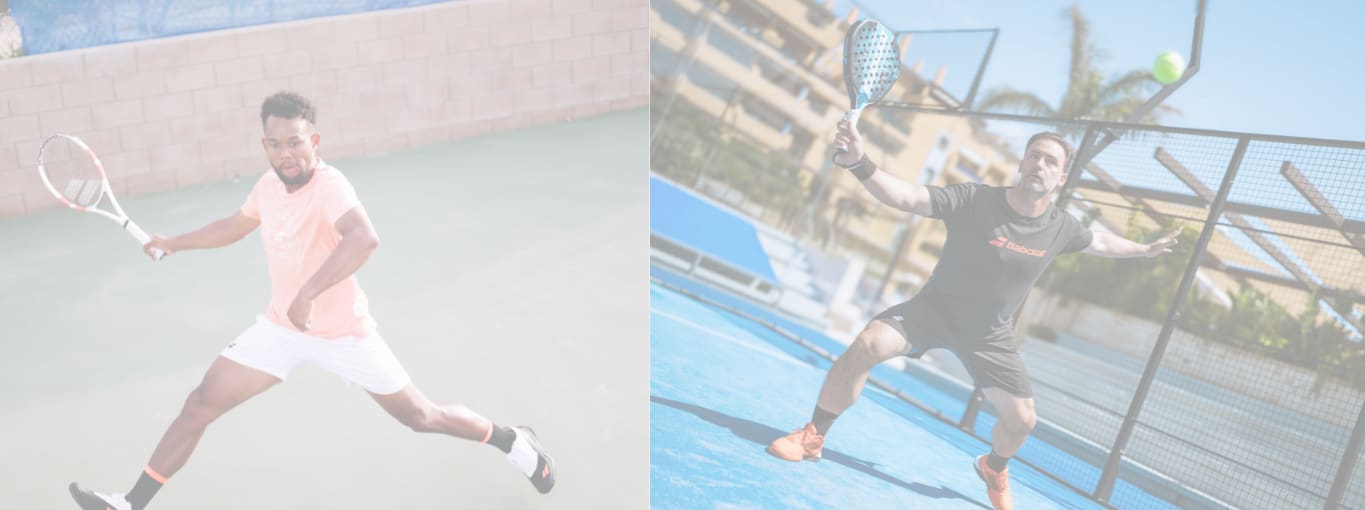
Are you torn between padel and tennis for your next sporting activity? This question often comes up among racquet sports enthusiasts looking for a discipline that is both fun and accessible. While these two sports share obvious similarities (a ball, a racquet, a net), their differences are far more pronounced than they may seem. Padel attracts players with its sociability and ease of learning, whereas tennis appeals to those seeking a technical challenge and a well-established sporting tradition.
whether you are a complete beginner or an experienced player looking for an alternative, this guide will help you make the right choice based on your expectations, profile, and sporting goals.
Padel and tennis: two racquet sports, two philosophies
Tennis has existed for over a century and is one of the most widely played sports in the world. As an olympic discipline, it embodies precision, power, and endurance. Every shot requires refined technique, solid physical preparation, and the ability to manage long rallies on a large court.
Padel, on the other hand, originated in the 1960s in mexico before conquering spain and argentina. This sport is played exclusively in doubles on a smaller court surrounded by glass or mesh walls. These walls are not just boundaries—they are an integral part of the game. The ball can bounce off them, creating unique tactical situations and often longer rallies than in tennis.
These two disciplines therefore offer radically different experiences. Tennis emphasizes individual intensity and power, while padel focuses on collective strategy and control. This fundamental distinction directly influences your choice depending on your sporting personality and expectations.
The key differences between padel and tennis
The court: dimensions and layout
A tennis court measures 23.77 meters long by 8.23 meters wide for singles and 10.97 meters for doubles. It is an open space without obstacles, where a ball going out of bounds ends the point. The surface can be clay, grass, hard, or synthetic, each affecting the ball's speed and bounce.
The padel court is much more compact: 20 meters long by 10 meters wide, about half the size of a tennis court. It is enclosed with glass walls on the sides and back, with metal mesh in the corners. This layout completely changes the dynamics: you can use the walls to extend rallies, perform tactical bounces, and surprise your opponents. The surface is usually synthetic grass with sand, providing good grip and minimizing slips.
The racquet: strings vs solid surface
The tennis racquets features a strung frame that allows for spin, power, and control. It measures around 68 cm long and weighs between 250 and 340 grams depending on the model. String tension can be adjusted to change the ball’s behavior: tighter strings offer more control, looser strings provide more power.
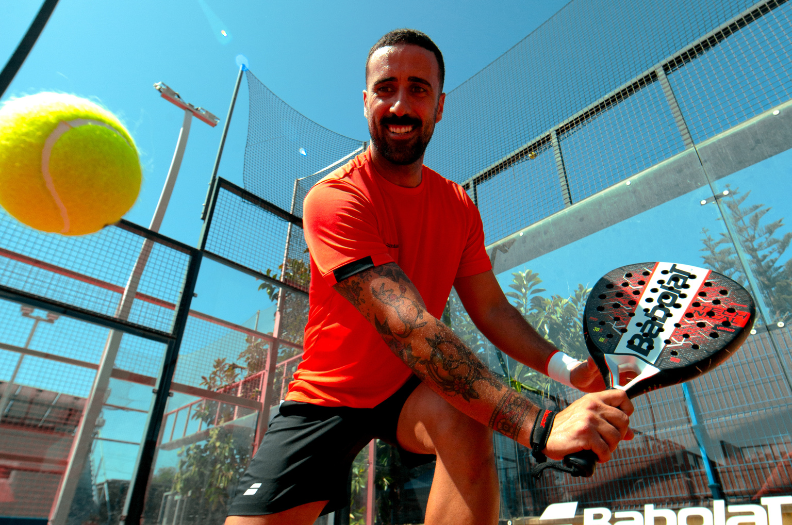
Conversely, the padel racquet (called a "pala") is short, thick, and stringless. It measures up to 45.5 cm long and has a solid surface with small holes to reduce air resistance. It weighs between 360 and 390 grams. This design offers less raw power but greater maneuverability and precision in close-range rallies. The ball feel is completely different: more muted, direct, and with fewer vibrations.
The ball: pressure and bounce
Padel and tennis balls look similar but have different technical characteristics. Padel balls have slightly lower pressure than tennis balls, between 4.6 and 5.2 kg compared to 8.165 kg for tennis. This pressure difference directly affects the bounce: padel balls bounce lower, slowing down the game and favoring tactical exchanges over pure power.
This makes padel more accessible for beginners: the ball is easier to control, rallies last longer, and you have more time to position yourself correctly. In tennis, a poorly controlled ball can quickly put you at a disadvantage due to its higher and less predictable bounce depending on the surface.
Game format: singles, doubles, and strategy
Tennis is played in singles (1 vs 1) or doubles (2 vs 2). Singles remain the most popular format in professional competitions and for players who want to work on their individual game. This format requires excellent physical condition since you must cover the entire court alone.
Padel is played exclusively in doubles. This rule is significant: it creates a strong social and collaborative dimension. You must communicate with your partner, coordinate movements, and anticipate their actions. This collective tactical component is at the heart of padel’s identity. Rallies rely on positioning, patience, and point construction rather than immediate winning shots.
Padel vs tennis: which discipline is harder?
Technical learning: progression curve
The learning curve is a major difference between the two sports.
· in tennis, mastering the basics takes time: serve, forehand, backhand, volley... Each movement requires precise coordination, proper preparation, and many repetitions to be effective. A complete beginner may take several months before executing structured rallies.
· in padel, progression is much faster. From the first sessions, you can exchange 10 to 20 shots and enjoy yourself. The stringless racquet is more forgiving, the smaller court reduces the distance to cover, and the walls offer a second chance if you are out of position. This immediate accessibility largely explains padel’s rapid popularity among beginners.
Physical demand: cardio and endurance
Physically, tennis is generally more demanding, especially in singles. You must sprint across the court, perform powerful shots, and maintain high intensity for sometimes over two hours. Cardio is heavily taxed, and your legs endure repeated, sharp changes of direction.
Padel requires less pure endurance but more explosiveness and reflexes. Movements are short, intermittent, with frequent direction changes. Effort is less continuous but more intense in bursts. Rallies often last longer than in tennis, maintaining moderate but constant cardio intensity. It is less stressful on the joints, ideal for those seeking regular physical activity without major injury risk.
Tactical dimension: positioning and strategy
Tennis emphasizes winning shots: a powerful serve, a passing shot down the line, an unstoppable smash. Tactics exist (varying spin, moving the opponent) but the goal remains gaining advantage through power or precision.
In padel, strategy is central. The goal is to control the net to dominate rallies, force opponents into defense, and gradually create openings. Walls add complexity: you must anticipate bounces, use angles, and master specific shots like the bandeja (soft smash) or vibora (side spin smash). The game is more patient, constructed, less spectacular but mentally intense.
Playing style in padel and tennis: what really changes
Padel-specific shots: bandeja, vibora, and wall bounces
Padel has its own technical vocabulary. The bandeja is an iconic shot: a smash hit with less power but more control, designed to maintain pressure without excessive risk. The vibora is a variant with lateral spin that complicates the opponent's return.
Bounces off walls are another fascinating feature. You can let the ball bounce off the glass after hitting the ground, creating angles impossible in tennis. Playing with walls requires a specific game reading and opens endless tactical possibilities. In tennis, once the ball is out, the point is lost. In padel, the game continues as long as the ball remains in the court.
The serve: power in tennis, precision in padel
The tennis serve is a major offensive weapon. A strong server can dominate a match through power and spin. The serve is overhead, involving the whole body. At high levels, it often makes the difference.
In padel, the serve must be underhand, below hip height. The ball must bounce before being hit. This limits power and makes the serve more of a starting play than a potential winning shot. Precision and setting up the next exchange are key. This difference fundamentally influences match dynamics: in padel, service rarely wins points, whereas in tennis it is a decisive advantage.
Rally pace and game dynamics
Tennis rallies are often shorter and more intense. A powerful serve followed by an aggressive return can end a point in two or three shots. The game is fast, vertical, based on acceleration and risk-taking. A single mis-hit can cost the point.
In padel, rallies frequently last 10 to 30 shots. The game is more horizontal and patient. You build the point gradually, look for openings, and exploit opponent errors. This dynamic makes padel particularly social: more time is spent playing than retrieving balls, and beginners can quickly engage in satisfying rallies.
Padel or tennis: which sport suits your profile?
You are a beginner in racquet sports
If you have never played a racquet sport, padel is probably the best choice to start. Its ease of learning, social doubles format, and immediate satisfaction make it ideal for starting without frustration. You will progress quickly and enjoy yourself from the first sessions.
Tennis requires more patience and initial investment. If you enjoy technical challenges, are willing to devote time to mastering the basics, and seek a sport with significant technical depth, tennis will suit you perfectly. The satisfaction of gradually mastering shots and developing your game is immense.
You value sociability and the social aspect
Padel excels in its social dimension. Playing doubles naturally creates a friendly atmosphere, interactions with your partner, and moments of camaraderie. Padel clubs often have a relaxed vibe with spaces for players to gather after matches. It is ideal for outings with friends or family.
Singles tennis offers a more solitary and intense experience, although doubles exists. Tennis clubs tend to have a more traditional atmosphere with established codes. If you primarily seek individual performance and personal achievement, tennis suits this expectation better.
You aim for performance and technical challenge
Technically ambitious players can find satisfaction in both disciplines, but differently. Tennis offers virtually infinite technical depth: you can spend years perfecting your serve, spin, and footwork. The progression potential is immense, sustaining long-term motivation.
Padel also requires advanced technical mastery at high levels, but emphasizes game intelligence, reading situations, and partner coordination. If you enjoy collective strategy and tactical thinking, padel will captivate you as much as tennis.
Equipment needed to start: padel vs tennis
Budget and equipment accessibility
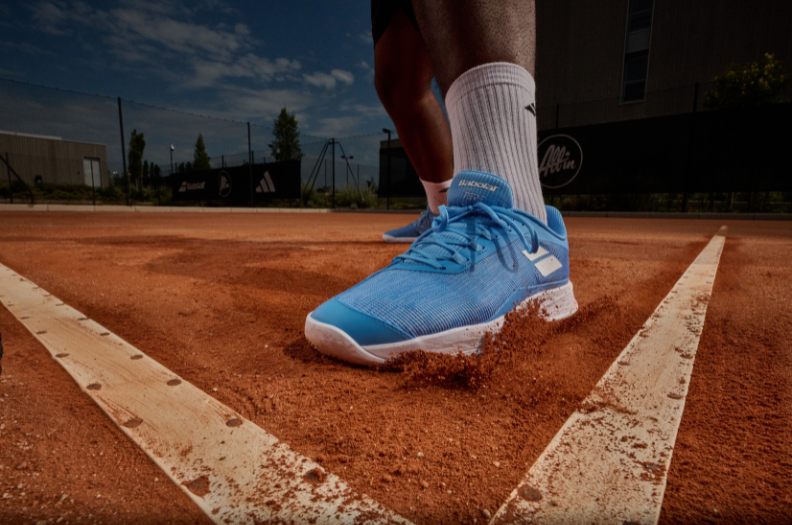
To start tennis, expect around €50–100 for a quality beginner racquet, about €30 for balls, and €60–120 for tennis shoes. Initial investment totals around €150–250 for a complete setup.
Padel requires a similar budget: an entry-level pala costs €60–120, balls are slightly cheaper, and specific padel shoes are recommended (€60–100). Total equipment falls in the same range, €150–250.
Regarding court rental, padel is often slightly more expensive due to infrastructure (glass walls, lighting). Expect €20–40 per hour, divided among four players. Tennis clubs with annual membership can be cheaper, but free access to padel courts balances this difference.
Where to play: clubs, courts, and availability
Tennis benefits from well-established infrastructure throughout france. Clubs are numerous, public courts are accessible, and finding playing partners is easy. Availability is abundant, though evening and weekend slots can be limited in big cities.
Padel is growing rapidly but remains limited in some regions. Major cities have multiple dedicated centers, but rural areas are less equipped. This situation is improving with new complexes opening monthly. An advantage of padel: most centers operate via online booking, facilitating court access. Check specialized websites or apps to find clubs and centers near you.
Why is padel booming in France?
Padel’s success in france is due to several converging factors:
· its accessibility attracts a wide population, from young professionals to seniors, regardless of skill level.
· the social aspect meets the expectations of a generation seeking friendly, collective activities.
· the lower joint strain appeals to former tennis players wanting to continue racquet sports safely.
· the doubles format allows longer play without excessive fatigue, making the sport accessible to a broader audience.
Do not confuse padel with paddleboarding (stand-up paddle), a water sport unrelated to racquet sports. Padel comes from the spanish "pádel" and exclusively refers to this glass-cage racquet sport. Finally, spanish influence and growing media exposure through professional tournaments and sports stars contribute to its popularity. Padel does not replace tennis but offers a complementary, more relaxed, and instantly rewarding alternative.
Whether you choose padel for its sociability and accessibility, or tennis for its technical demands and tradition, both sports offer rich and complementary experiences.
The ideal approach? Try both to discover which best suits your sporting personality and goals. Nothing prevents you from practicing both simultaneously: they share enough in common for skills gained in one to enhance your game in the other.
You may also like
Padel shots: a complete guide to mastering essential techniques
3 min. reading
Published on
03/11/2025
Padel vs pickleball: what are the differences between these two racquet sports?
4 min. reading
Published on
29/10/2025