Padel
Pickleball
4 min. reading
Published on
10/29/25
Padel and pickleball are growing in popularity in France and around the world. These two racquet sports attract players of all levels thanks to their accessibility and friendly atmosphere. Although they share some similarities, these disciplines differ significantly in terms of court, equipment, rules, and style of play. Here’s a guide to help you understand what distinguishes padel from pickleball and choose the one that best suits your expectations.
What is padel?
Origin and history of padel
Padel originated in Mexico in 1969 when Enrique Corcuera decided to adapt a tennis court at his home by adding walls. The sport quickly spread to Spain in the 1970s, where it developed to become one of the country’s most practiced sports. Today, padel is rapidly expanding across Europe, especially in France, where clubs and courts are multiplying.
Basic rules of padel
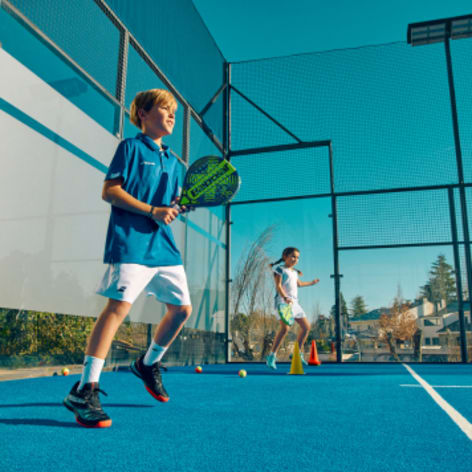
Padel is mainly played in doubles on a 20-meter-long by 10-meter-wide court surrounded by glass or wire walls, which are an integral part of the game. Players use solid perforated racquets and a ball similar to a tennis ball but with lower pressure. The scoring system follows tennis rules (15, 30, 40, game), and serves are made underhand, below the waist. The use of walls to bounce the ball adds a unique strategic dimension to the game.
What is pickleball?
Origin and history of pickleball
Pickleball was invented in the United States in 1965 by three fathers looking to entertain their children. The sport combines elements of badminton, tennis, and ping-pong. It first developed in North America before spreading worldwide. Its accessibility and ease of learning make it popular among all generations.
Basic rules of pickleball
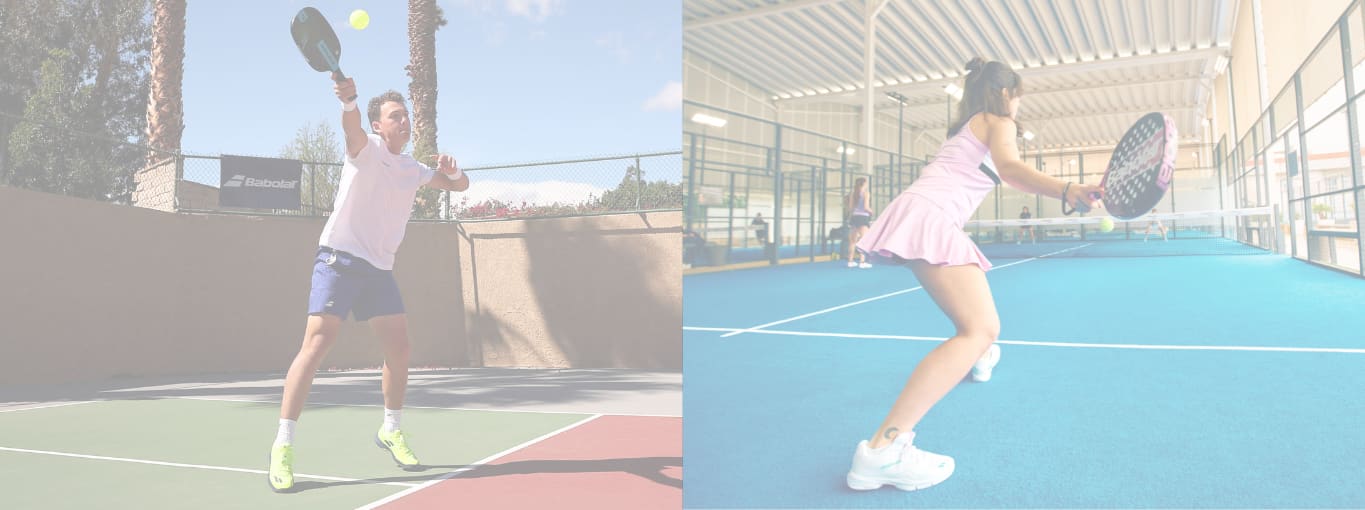
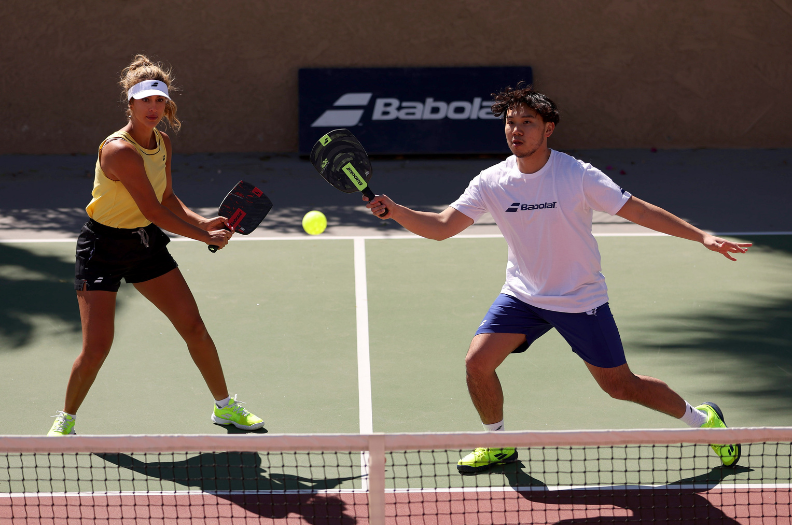
Pickleball is played on a smaller court than padel, measuring 13.41 meters long by 6.10 meters wide — roughly the size of a badminton court. Players use flat paddles made of composite or graphite materials and a perforated plastic ball similar to a wiffle ball. It can be played in singles or doubles. The scoring system differs from tennis: matches are generally played to 11 points, with a two-point margin required to win. A unique feature of pickleball is the non-volley zone, called the "kitchen," located on each side of the net, where volleying is prohibited.
The 5 major differences between padel and pickleball
The court: dimensions and characteristics
The first major difference lies in the court. A padel court is much larger, covering about 200 m² compared to roughly 81 m² for pickleball. Padel’s distinctive feature is its surrounding walls, which are part of the gameplay. Players can use these glass or wire walls to return the ball, creating unique angles and trajectories. Pickleball, on the other hand, is played on an open court without walls, with only a net in the center at a height of 86 cm.
Equipment: racquets and balls
Padel racquets are solid, thick, and perforated, usually made of fiberglass or carbon fiber. They have no strings and weigh between 360 and 390 grams. The ball resembles a tennis ball but has lower pressure to slow down the game. Pickleball paddles are lighter, flat, and resemble oversized ping-pong paddles. They are made of composite, graphite, or wood. The perforated plastic ball is much lighter and produces a distinctive sound when struck.
Rules and scoring system
Padel uses the traditional tennis scoring system (15-30-40-game) with sets and games. Serves are made diagonally, underhand, and must bounce in the opponent’s service box. Pickleball adopts a simpler scoring system: matches are typically played to 11, 15, or 21 points depending on the competition level, and only the serving team can score points. Serves are also made diagonally but with an underhand motion below the hip.
Physical intensity and style of play
Padel requires higher physical intensity due to its larger court and frequent lateral movements to handle wall rebounds. Rallies are often long and dynamic, demanding good physical condition, agility, and quick reflexes. The game is explosive, with powerful smashes and volleys. Pickleball offers a slower, more accessible pace. Rallies emphasize strategic placement and precision over power. The non-volley zone encourages patient, tactical play, making it suitable for all ages and fitness levels.
Popularity and accessibility in France
Padel has been expanding rapidly in France in recent years. Facilities are developing quickly with the opening of many dedicated clubs. The sport particularly appeals to tennis players looking for a more social and accessible alternative. Pickleball, while growing, remains less common in France. Courts are fewer, but interest is steadily increasing. One of its main advantages is that it can be played on existing tennis or badminton courts with a simple portable net.
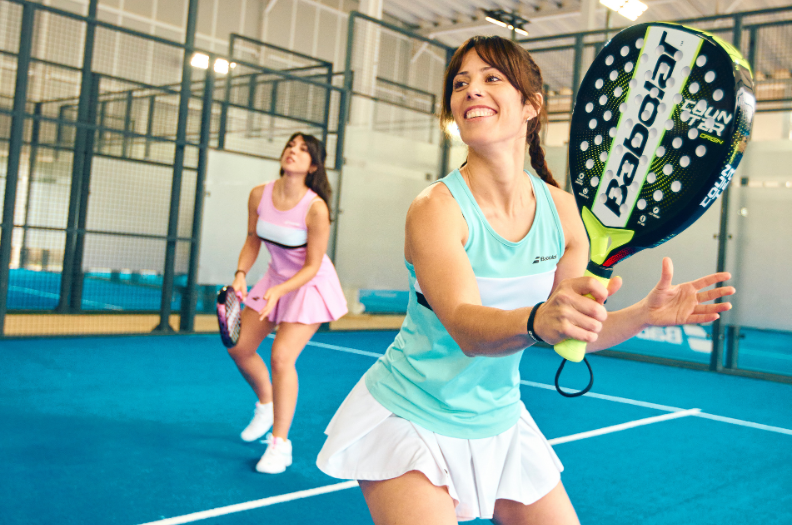
パデルとピックルボールの共通点
違いはあるものの、両スポーツには多くの共通点があります。どちらも主にダブルスでプレーするため、自然とコミュニケーションが生まれ、社交性が高いスポーツです。テニスよりも始めやすく、習得までのハードルも低いため、初心者でも気軽に楽しめます。小さめのコートは素早いラリーとダイナミックな試合を可能にします。協調性、反射神経、戦略的思考が求められる点も共通しています。さらに、用具やコートレンタルにかかるコストが比較的抑えられる点も、両スポーツの大きなメリットです。
パデルかピックルボール:どちらを選ぶべき?
パデルは誰に向いている?
パデルは、より身体的でダイナミックなスポーツを求める人に最適です。長いラリーや壁を使った戦術的なプレー、アスレチックな動きを求める方には最適です。テニスプレーヤーは慣れ親しんだ感覚を味わいながら、新しいゲーム性を楽しめる点が魅力です。多数の大会やイベントがある成長中のコミュニティに参加したい方にも最適です。
ピックルボールは誰に向いている?
ピクルボールは、初心者、高齢者、または身体的負担の少ないアクティビティを求める人に向いています。ルールがシンプルで習得しやすく、すぐに楽しむことができます。戦略とポジショニングがパワーよりも重要で、すべてのレベルに対応可能です。家族や友人と楽しむのに最適な選択です。
パデル初心者におすすめのバボラ用具
ラケットスポーツの老舗ブランドであるバボラは、初心者から上級者、そして世界ツアーで活躍するトッププロまで、あらゆるレベルに対応したパデル用具を展開しています。バボラのラケットは品質・バランス・革新的テクノロジーに優れ、プレーヤーの成長をサポートします。初心者にはコントロールと寛容性を兼ね備えたラウンド型ラケットが最適です。また、快適にプレーするためにはパデル専用ボール、ラケットバッグ、そして関節をしっかり支えるシューズも欠かせません。バボラのパデル製品ラインナップをチェックして、自分に合ったアイテムを見つけてください。
パデルでもピックルボールでも、重要なのは自分のスタイルや目的に合ったスポーツを選ぶことです。パデルは壁を使った戦略性と刺激的なラリーが魅力で、ピックルボールは誰でも楽しめる手軽さが特長です。どちらのスポーツもフランスをはじめ世界中で競技人口が増えており、毎年多くの新しいプレーヤーを惹きつけています。
You may also like